
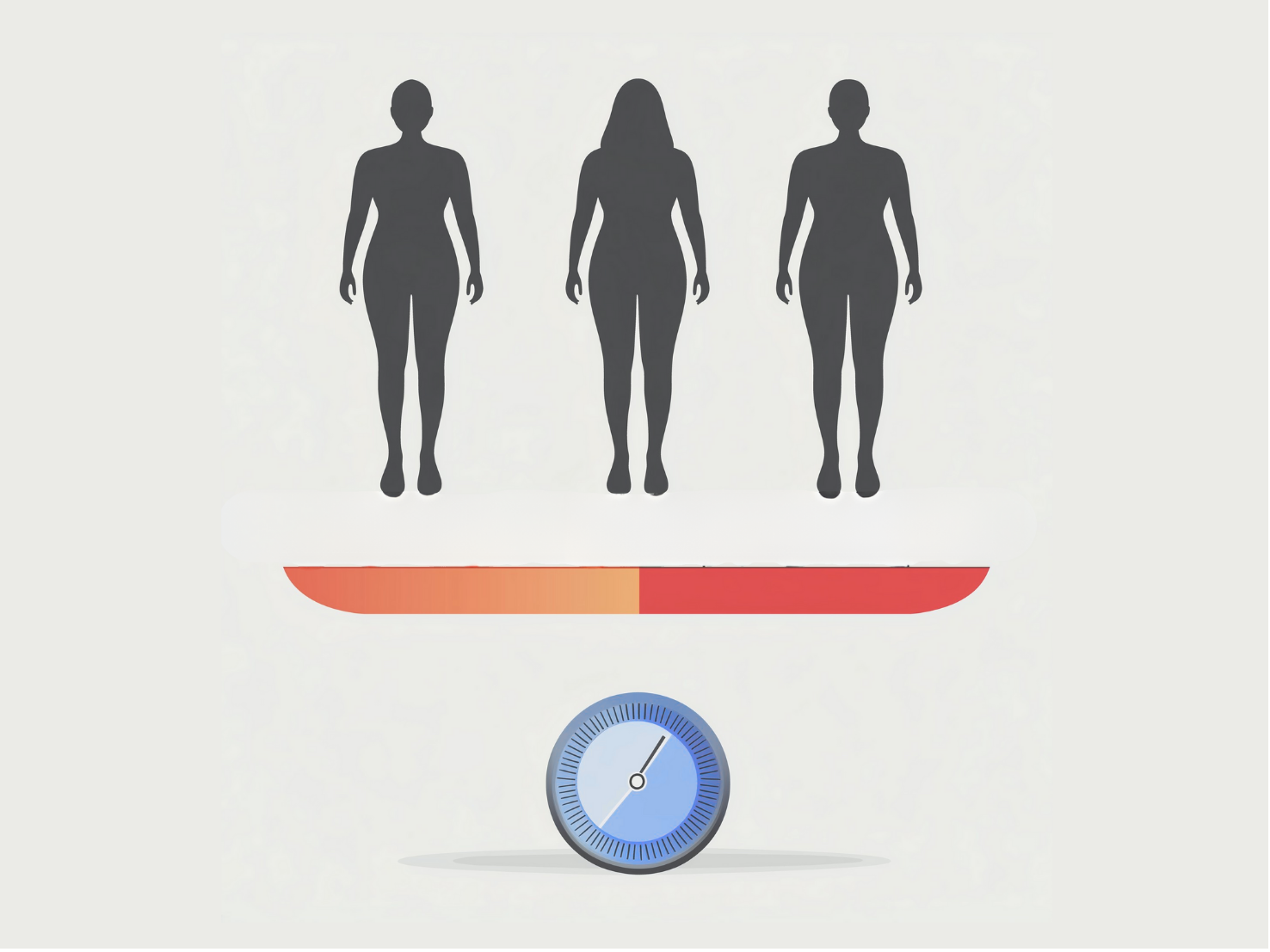
Body Mass Index (BMI) is a simple yet effective measurement used to assess whether your weight falls within a healthy range. In this comprehensive guide, you’ll find everything you need to know about calculating BMI, ideal weight ranges, and the BMI requirements for bariatric surgery.
What Is Body Mass Index (BMI)?
BMI (Body Mass Index) is a formula used to estimate body fat based on an adult’s height and weight. Accepted by the World Health Organization (WHO), this measurement:
- Determines obesity risk
- Indicates ideal weight ranges
- Assesses eligibility for bariatric surgery
How Is BMI Calculated?
The formula for calculating BMI is straightforward:
BMI = Weight (kg) / (Height (m) × Height (m))
Example:
If your height is 1.70 meters and your weight is 85 kilograms:
85 / (1.70 × 1.70) = 29.4 BMI
What Should Your BMI Be? | WHO Classification
| BMI Range | Category | Situation |
| Under 18.5 | Weak | May pose a health risk |
| 18.5-24.9 | Normal Weight | Healthy range |
| 25-29.9 | Overweight | Obesity risk |
| 30-34.9 | Obesity (Class 1) | High risk |
| 35-39.9 | Obesity (Class 2) | Serious risk |
| 40 and above | Morbid Obesity | Bariatric surgery candidate |
What Do BMI Results Mean?
- Below 18.5: Undernourishment, risk of osteoporosis
- 18.5–24.9: The healthiest range
- 25–29.9: Weight loss recommended
- 30 and above: Risk of obesity, diabetes, and heart disease
- 40+: Bariatric surgery (gastric sleeve, gastric bypass) may be considered
Tips for Calculating BMI Accurately
- Take measurements on an empty stomach in the morning.
- Use your actual measured height (do not estimate).
- BMI can be misleading for muscular individuals (muscle mass weighs more than fat).
- Bone density loss in elderly people can affect BMI results.
BMI Values by Age
| Age group | Ideal BMI |
| 19-24 | 19-24 |
| 25-34 | 20-25 |
| 35-44 | 21-26 |
| 45-54 | 22-27 |
| 55-64 | 23-28 |
| 65 | 24-29 |
As Age Advances, Slight Weight Gain Is Considered Normal.
What Should Your BMI Be for Bariatric Surgery?
General criteria for bariatric surgery (gastric sleeve, gastric bypass):
- BMI ≥ 40 (Morbid obesity)
- BMI 35–40 + Obesity-related conditions (e.g., diabetes, hypertension)
- BMI 30–35 (In recent years, accepted in some special cases)
Note: The final decision is made through a doctor’s evaluation.
Is BMI Alone Sufficient?
No! BMI does not show fat distribution. Additional measurements are recommended:
- Waist circumference (less than 80 cm for women, less than 94 cm for men)
- Body fat percentage (Bioimpedance analysis)
- Blood markers (cholesterol, blood sugar levels)
Frequently Asked Questions
How is BMI calculated in children?
- In children, BMI is calculated by incorporating age and gender to determine percentiles.
Does BMI give accurate results for athletes?
- BMI can be misleading for athletes with high muscle mass; body fat measurement is more accurate.
Does BMI tell me my ideal weight?
- It provides an approximate range, but for a personalized evaluation, consult a dietitian.
If you wish, you can check out our recipes at Bariatric Kitchen and visit our Türkçapar Bariatrics website for more information.
